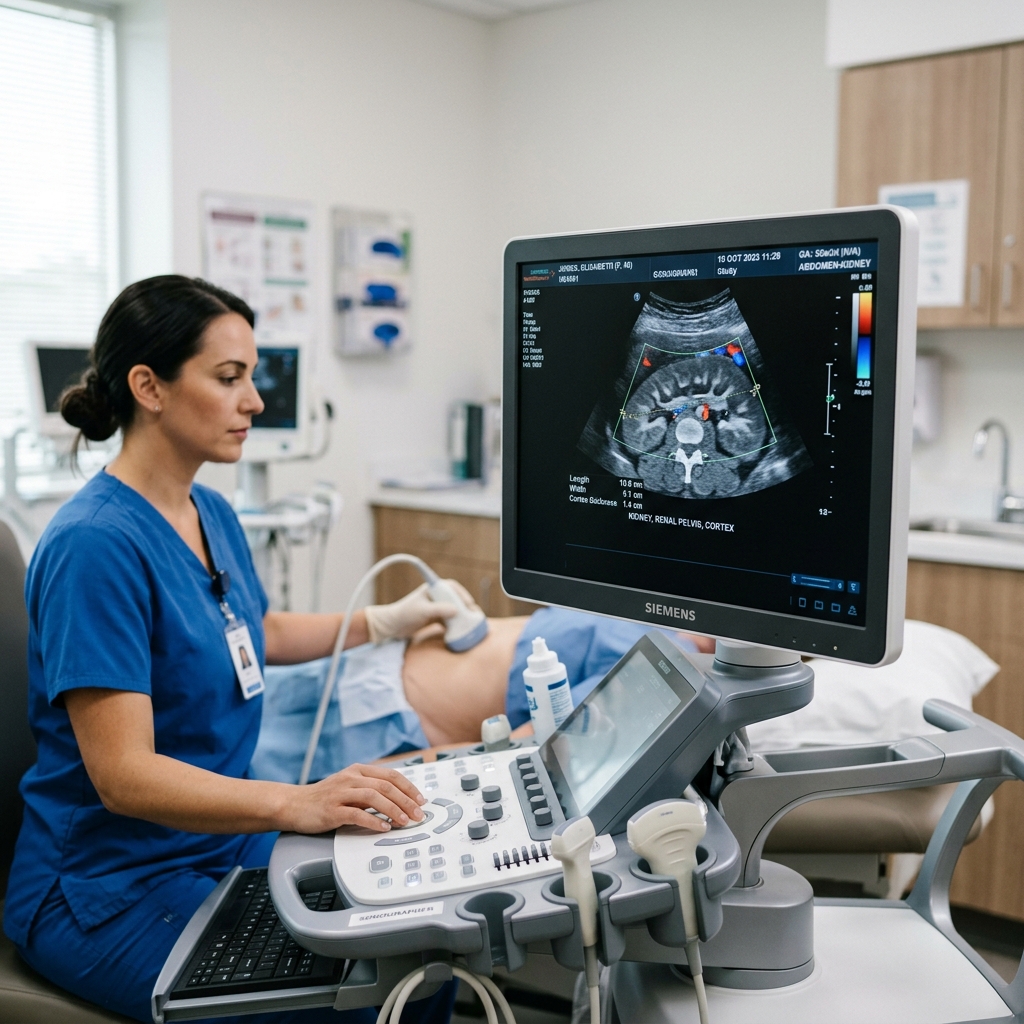
A pediatric urodynamic study is a specialized outpatient test that measures how well your child's bladder fills, stores, and empties urine. It evaluates the coordination between the bladder muscle and the urinary sphincter to diagnose nerve or muscle dysfunction.
Urodynamic testing is indicated to find the cause of bladder problems, including:
Your child may require a urodynamic study if they show these symptoms:
Measuring bladder pressure changes as saline is slowly filled, tracking bladder compliance and muscle contractions.
Recording pelvic floor muscle activity using surface electrodes to check muscle relaxation during voiding.
A non-invasive test measuring the speed and pattern of the urine stream into a specialized funnel.
The child's urine must be sterile (free of infection). Parents are briefed on the procedure using child-friendly stories.
Thin catheters are placed. The bladder is filled while a computer records pressures, muscle activity, and leakage points over 30-45 minutes.
Immediate analysis of the graphs to adjust medication, schedule clean catheterization, or recommend reconstructive options.
"My daughter was wetting herself constantly. The urodynamic study done by Dr. Sujit's team identified the bladder muscle issue, and her treatment is finally working."
"A very child-friendly setup for Urodynamics. The nurse and doctor made my son very comfortable during the study. Highly recommended."
"The Urodynamic test helped diagnose our child's neuropathic bladder accurately, avoiding unnecessary surgery. Very professional team."
Точность операции доктора Чоудхари невероятна. Его уверенность дала нам огромное душевное спокойствие в очень стрессовое время.
"Мы приехали из другого города специально к доктору Чоудхари. Его подход очень научный и методичный, но в то же время очень заботливый."

Urodynamics studies provide crucial diagnostic maps of bladder and sphincter function, enabling precise and personalized treatment plans.
It is a series of tests that evaluate how well your child's bladder fills, stores, and empties urine.
Children with neuropathic bladder, spina bifida, posterior urethral valves, unexplained wetting, or recurrent UTIs benefit from UDS.
It is generally not painful, though placing the tiny catheter can cause temporary mild discomfort. Children are supported throughout the test.
The test typically takes about 45 to 60 minutes to complete in a comfortable, child-friendly environment.
No, the study is performed while the child is awake to obtain accurate measurements of bladder sensation and muscle activity.
The child should not have an active UTI. A stool cleanout is often recommended the night before to ensure the rectum is empty.
It measures bladder capacity, pressure inside the bladder, flow rate, and pelvic floor muscle activity during urination.
Urodynamic studies provide critical insights into bladder storage and pressure. Schedule a consultation today.
D6, Club, 2, напротив Vasant Vihar, Vasant Vihar, Нью-Дели, Дели 110057
+91 98732 06761
